
Music for May 2026
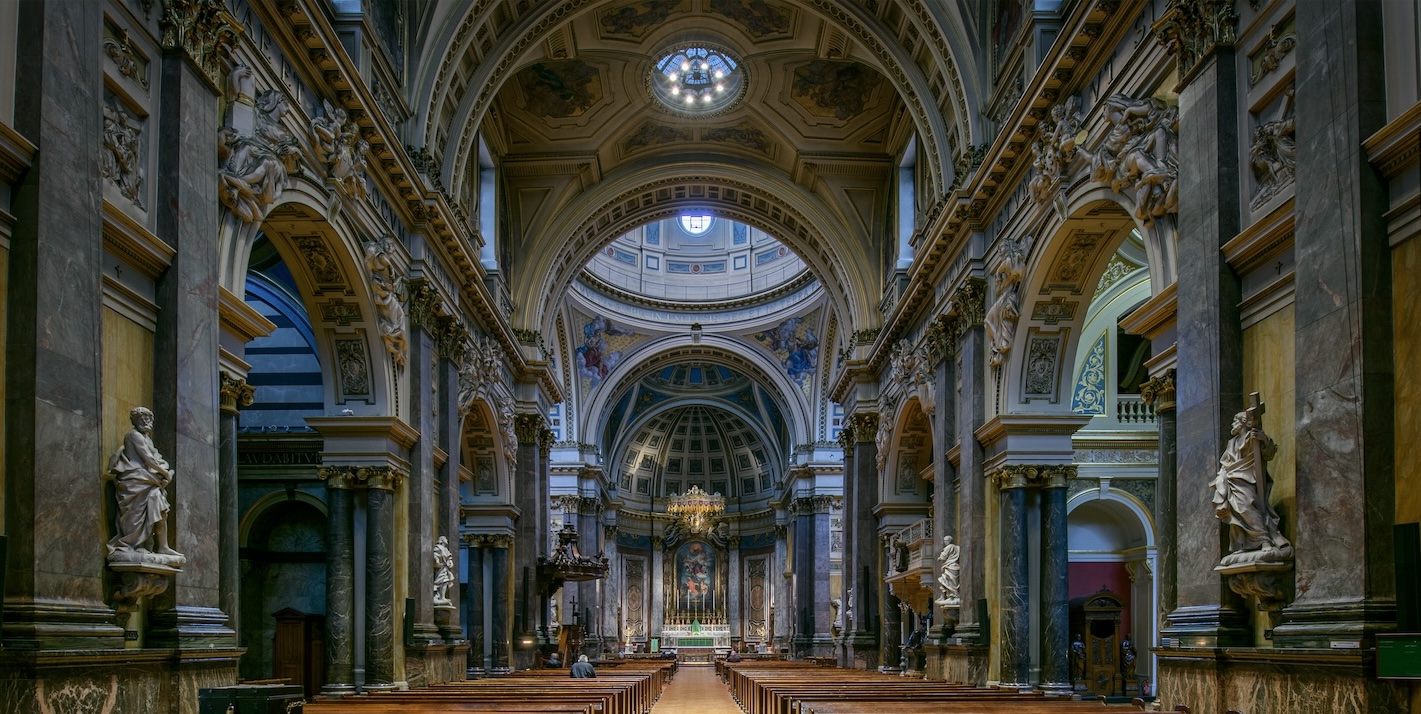

Scroll down to the end to read some Notes from the Choir Gallery, describing the musical repertoire for this month's celebrations of St Philip Neri.
Sunday 3rd May: EASTER V
MASS:
Prelude: Herzlich thut micher freuen Brahms.
Missa Jesu nostra redemptio Palestrina.
Regina caeli (à 8) Guerrero.
O quam suavis Vivanco.
Prelude & Fugue in A minor Brahms.
VESPERS & PROCESSION OF THE BVM:
Ad regias Agni dapes Russill.
Magnificat Tone 2 à 5 Lassus.
Ave Maria (à 4) attrib. Handl.
Versos per l’Entrada de la ‘Salve Regina’ Lopez.
Sunday 10th May: EASTER VI
MASS:
Allegretto Whitlock.
Spatzenmesse (K. 220) Mozart.
Ardens est cor meum Dering.
Ego sum qui sum Giovanni Gabrieli.
Postlude in D minor Stanford.
VESPERS:
Ad regias Agni dapes Washington.
Magnificat Tone 8 à 4 & 6 Russill.
Christus resurgens Lassus.
Prelude on atheme of Gibbons (Song 22) Stanford.
Wednesday 13th May: First Vespers of the Ascension
VESPERS:
Deus in adjutorium meum (I) Zacharia.
Salutis humanae Sator Russill.
Magnificat Tone 6 à 8 Bevan.
O Rex gloriae Marenzio.
Prelude: Heut triumphieret Gottes Sohn (630) Bach.
Thursday 14th May: THE ASCENSION OF THE LORD
MASS:
Allegretto (Sonata No. 4) Mendelssohn.
Missa Corrente Foggia.
O Rex gloriae Palestrina.
O bone Jesu (à 5) Dering.
Allegro maestoso e vivace (Sonata No. 4) Mendelssohn.
Sunday 17th May: EASTER VII
MASS:
Prelude: Nun ruhen alle Walder Van Oortmerssen.
Missa Ascendens Christus Victoria.
Ascendens Christus in altum Victoria.
Regina caeli Sweelinck.
Toccata V: Tutta de salti Kerll.
VESPERS:
Salutis humanae Sator Gregorian chant.
Magnificat Tone 8 à 5 (56/1619) Lassus.
Crucem sanctam subiit Palestrina.
Electa ut sol Dallier.
Sunday 24th May: PENTECOST
MASS:
Prelude: Komm, heiliger Geist (200) Buxtehude.
Missa Sancti Nicolai Haydn.
Dum complerentur Palestrina.
Veni Creator Spiritus Attwood.
Fantasia: Komm, heiliger Geist (651) Bach.
VESPERS:
Deus in adjutorium meum (II) Zacharia.
Veni Creator Washington.
Magnificat Tone 1 à 6 Bevan.
Hodie completi sunt Andrea Gabrieli.
Regina caeli Soriano.
Prelude: Komm, Gott Schöpfer (667) Bach.
Monday 25th May: First Vespers of St Philip
VESPERS:
Deus in adjutorium Croce.
Pangamus Nerio D. Scarlatti.
Magnificat primi toni II (1576) Victoria.
Florete flores beati Nerii Allegri.
Regina caeli (à 8) Bertolusi.
Choral Song S. S. Wesley
Tuesday 26th May: OUR HOLY FATHER ST PHILIP (with period brass)
MASS:
Chorale Prelude: Jesu hilf siegen Karg-Elert.
Caritas Dei Matucci.
Missa In illo tempore Monteverdi .
Pangamus Nerio Wingham.
O sacrum convivium Handl.
Marche triomphale Karg-Elert.
Sunday 31st May: TRINITY
MASS:
Adagio e dolce (Sonata No. 3) Bach.
Missa Laetatus sum Victoria.
O beata et gloriosa Trinitas Palestrina.
Libera nos, salva nos I Sheppard.
Triptyque (Office of Trinity) Tournemire.
VESPERS:
Deus in adjutorium meum Victoria.
Iam sol recedit Russill.
Magnificat Tone 4 Aguilera.
Tibi laus Philips.
Prelude in C major (547i) Bach.
Notes from the Choir Gallery - May 2026
The musical programme for this year’s celebrations of the Feast of Our Holy Father St Philip, which will be graced by the presence of our new Archbishop for First Vespers (25th May) and of Cardinal Nichols for Mass (26th May), has some features meriting comment. At Vespers, the setting for the office hymn Pangamus Nerio will be by Domenico Scarlatti (1685-1757),which was introduced last year. Though Scarlatti is most celebrated for his 555 keyboard sonatas, he wrote operas and secular cantatas, and some church music, including a superb 10-voice Stabat mater. We have only one office hymn by him, an Iste confessor, which in Rome has been traditionally used also for Pangamus Nerio. It makes a charming substitute for the home-grown 19th-century setting we have long previously used.
During St Philip’s life and after, the Roman Oratory was something of a kindly refuge for Papal musicians. According to historical accounts and tradition Palestrina died in St Philip’s arms, and members of the Papal Choir were buried in a tomb in the Oratory church, Santa Maria in Vallicella. One of these was Gregorio Allegri, who died in 1652. As the motet at Solemn Benediction we will hear his Florete flores beati Nerii, published in 1621, to a text in praise of St Philip adapted from the Communion of Our Lady of the Rosary.
The Mass setting on 26th May will be Missa In illo tempore from Monteverdi’s published collection of 1610, which also includes the celebrated Vespers. The Mass is written in polyphonic style, based on a motet by Gombert (c.1495 – c. 1560), rather than the flamboyant baroque style of the Vespers. Although the technique is essentially old-fashioned, Monteverdi’s use of it is highly individual and richly serene. Its glowing 6-voice textures will be underpinned by the use of period brass instruments – cornetts, sackbuts and a bass dulcian.
EXPLORE WHITFIELD
EXPLORE WHITFIELD