
May 2026 Letter from the Provost
During Eastertide, we heard the Gospel account of the journey of two disciples on the way to Emmaus when Our Lord, whom at that moment they believed to be a stranger, joined them on the road, “And beginning at Moses and all the prophets, he expounded to them in all the scriptures, the things that were concerning him” (Luke 24:27). What a conversation must that have been.
At the Easter Vigil on Holy Saturday, we listened to the deacon as he sang the great hymn of praise known as the Exsultet. This traces the history of God’s salvific interactions with His people from the fall of Adam up to that “truly blessed night, worthy alone to know the time and the hour when Christ rose from the underworld.” Like the disciples whose hearts burned within them on the way to Emmaus while Our Risen Lord explained the Scriptures, we were then led lesson-by-lesson through the salient events of the Old Testament under the illumination of the Paschal Candle.
There is so much in the Old Testament that at first sight seems mysterious to the point of bewildering us. Until, that is, we read the Old Testament in the light of the Gospel. How strange it seems that God should create Eve from the side of Adam while he lies asleep, until we see the Bride of Christ issuing from the wounded side of Our Blessed Lord as He sleeps the sleep of death on the Cross. How the account of God commanding Abraham to kill his son, and the description of young Isaac himself carrying the wood required for a burnt offering to the place appointed for his own sacrifice on Mount Moriah troubles us, even when God substitutes a ram at the last moment; until, that is, we see the Son of God carrying a wooden cross to Calvary, close to the peak of that same Mount Moriah on which stands the Temple.
The more deeply we are immersed in the New Testament the greater will be our appreciation of the Old. St Augustine is one of the Church Fathers who drew a link between Babel and Pentecost. In the eleventh chapter of Genesis, we see how the descendants of Noah all spoke one language until they decided to build a city with a tower so high that it would reach to Heaven. Almighty God corrected this hubris by making them speak indifferent tongues. The city and tower were abandoned and its builders scattered in all directions: “And therefore the name thereof was called Babel because there the language of the whole earth was confounded” (Genesis 11:9).
Babel is the description of a kingdom in which men have convinced themselves that they possess so much technological power that they no longer need a distant God and that they are advanced enough to build a way to Heaven by themselves. While striving to build the tower, suddenly they realise that they are working against each other. They have lost a fundamental element of being human: the capacity to communicate, to understand and to work together.
Babel is a warning against any attempt by humans to achieve salvation on their own terms. In our day we see around us the consequences of the attempts of “globalists” and technocratic politicians to build a “new world order” detached from the Christian foundations of our civilisation. We are promised peace, equality, health, and prosperity, and instead we find ourselves inhabiting a society increasingly fragmented by identity politics and confusion, blighted by a widespread crisis of credibility in public life, wounded by state-sanctioned crimes of abortion and euthanasia, and ever new wars between nations that threaten to escalate into global conflagration.
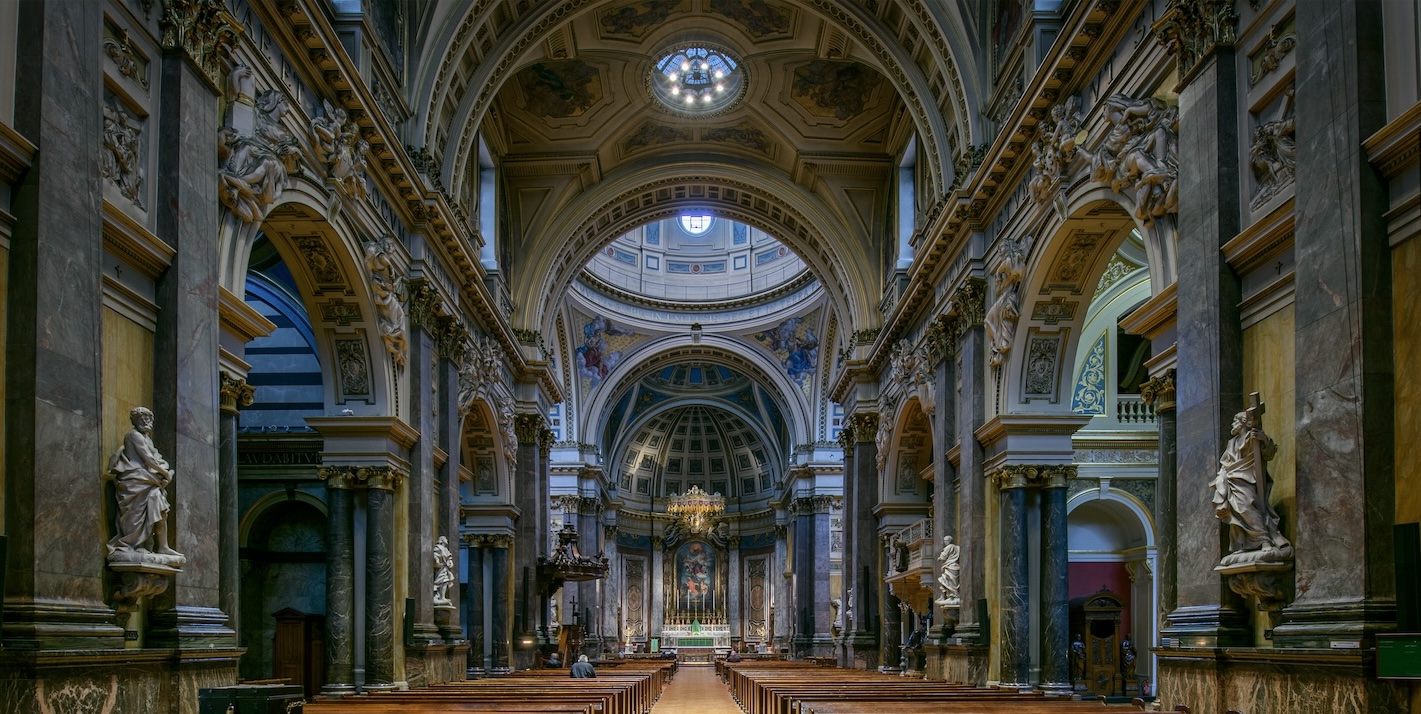
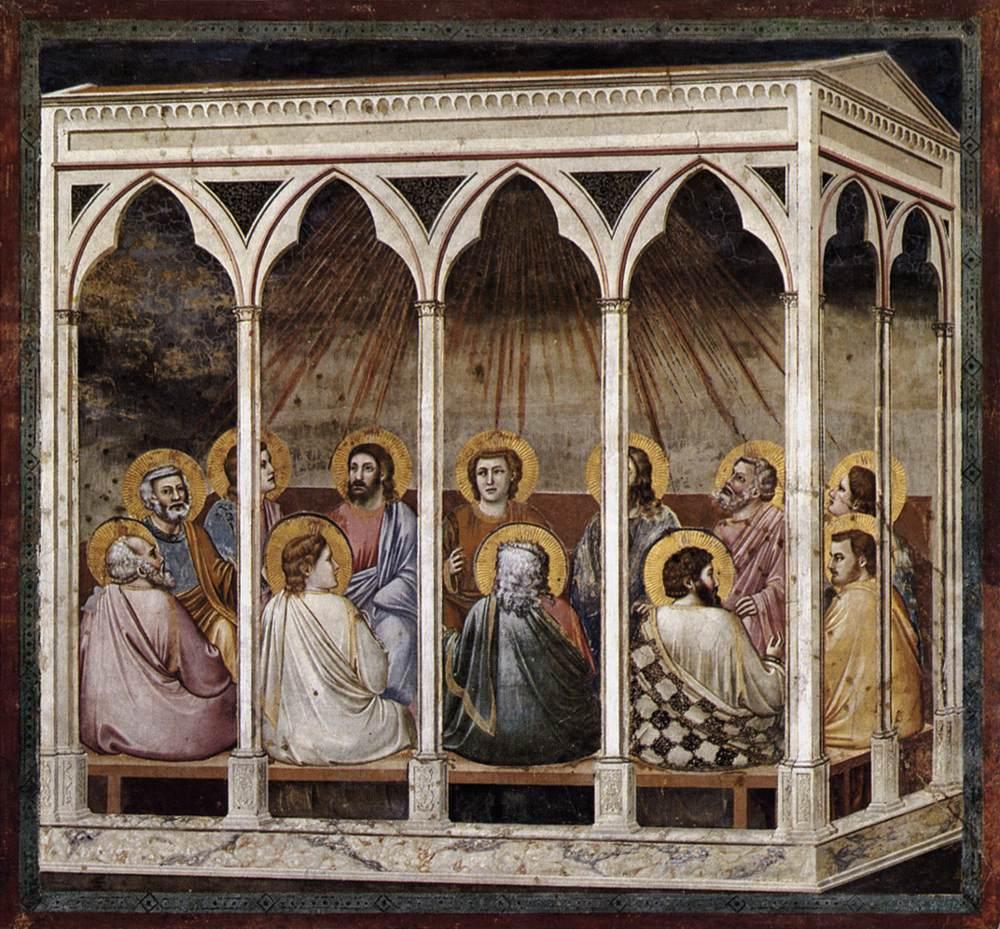
For St Augustine, Pentecost is the reversal of Babel. In the Acts of the Apostles (2:3) we see how “parted tongues as it were of fire” rested on the Apostles’ heads and they began to speak in a multiplicity of tongues, so that the multitudes of every nation heard the Gospel preached for the first time in their own languages. And so today among the faithful gathered for Mass in the Oratory church we see Catholics of countless ethnicities all professing the same Creed and kneeling at the same altar to receive Our Lord in the Blessed Sacrament, each one of us united supernaturally within the same Mystical Body of Christ – united with each other, united with the Saints in Heaven, united with Catholics in every age and in every part of the globe.
In this month of the great feast of Pentecost, let us open our hearts to the Holy Ghost, so that He may fill us with faith and zeal for the interests of Almighty God, and remember that if our language is to be the language of the Gospel, then it must be the language of pace, humility and mercy. And as the tower of Babel crafted by enemies of the Gospel inevitably crumbles and collapses around us may Christ’s Church flourish and expand Her mission of salvation.
Father Julian Large
EXPLORE WHITFIELD
EXPLORE WHITFIELD