
Archbishop's Sermon for First Vespers of St Philip 2026
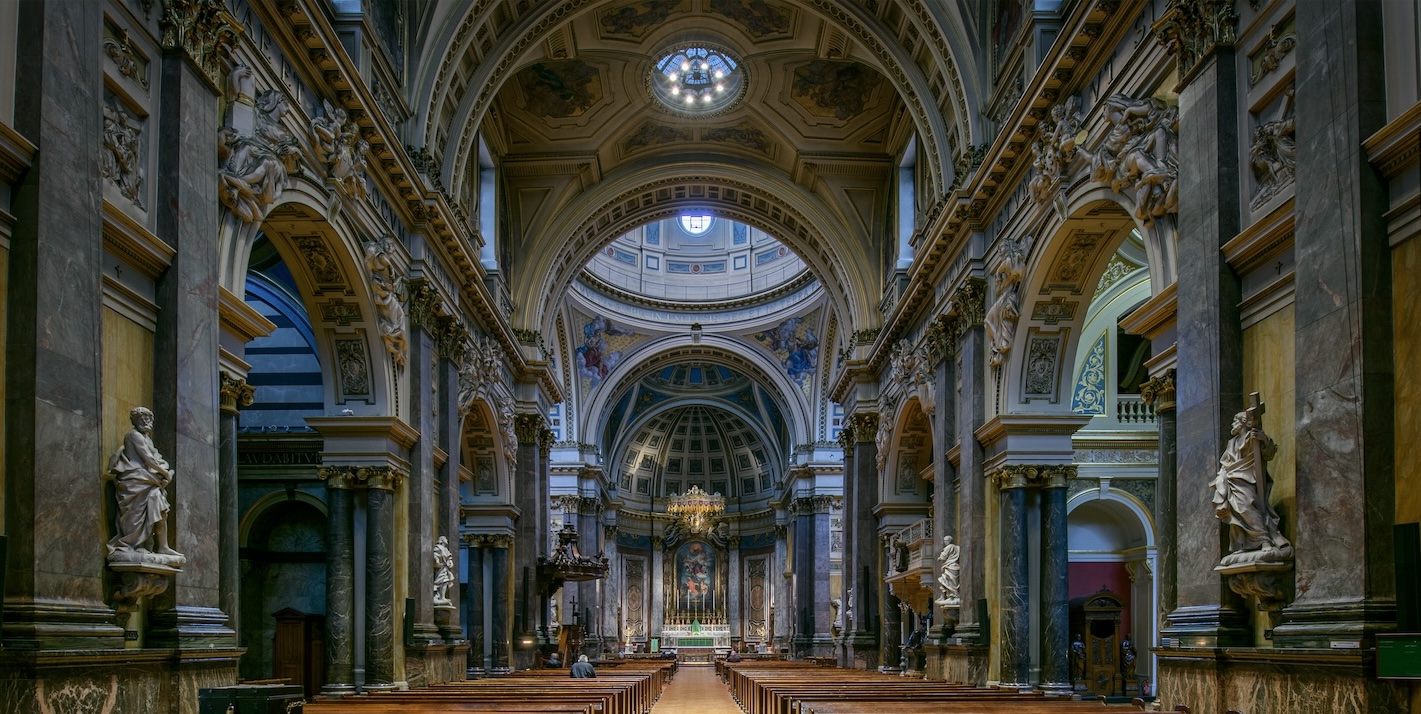

On Monday 25th May, the Fathers of the Oratory were delighted to welcome the recently installed Archbishop of Westminster, Richard Moth, on a visit to our Church. The Archbishop presided and preached at First Vespers for the Solemnity of Our Holy Father St Philip Neri, and celebrated Pontifical Benediction. In place of this month's Provost Letter, we are pleased to present the text of the Archbishop's sermon below.
Dear brothers and sisters,
The celebration of a First Vespers is a sign for the whole Church of a significant feast day, so the Vespers we have prayed this evening is a mark of a feast of particular significance for this community and the great church in which we celebrate this evening. Had it not been for St Philip, this community of priests, this church and all those who are drawn to Christ through the ministry of the Oratory would not be here. We might not have the hymns of Fr Faber, and we might reflect that St John Henry Newman, Doctor of the Church and Patron of Education, could not have been an Oratorian.
In 1515 Henry VIII was ruling in England and, in that year, appointed Cardinal Wolsey as Lord Chancellor. We know well the events that were to follow here in this land. It was in that same year that St Philip was born in Florence and, at the age of 18, moved to Rome – where St Peter’s Basilica was under construction. St Philip’s subsequent life was to have a profound impact on the city: in the service of the poor, in his initiative to establish occasions of prayer and readings that would be profound moments of catechesis for so many and in the many souls he touched through his gifts as a confessor and through his humour and joy.
What one might regard as his greatest insight is, I suggest, a particular gift to our present society. It is community. Before he became a priest, he already realised that his outreach to the poor and marginalised of his day would be more effective if he brought others to work with him – so he established a brotherhood for the work.
His inspiration behind the Oratory itself is, surely, the value of priests living in community. The prayer and support for one another and the combined ministry that such a group of priests brings to the world has particular strengths, both for the priests themselves and in the depth and breadth of impact in the life of the Church that such a community can have.
In a society where so many are living in increasing isolation, the presence and example of community calls all to a recognition of the dignity of the other; the value that others can bring to the lives of all those they encounter. Indeed, on this very day, Pope Leo has given us his encyclical letter, Magnifica Humanitas, in which he calls us to recognise that we are interdependent on one another, that ‘no one is saved on their own.’ He speaks of a spirituality for our time and makes reference to the Pauline image of a reconciled humanity, called to be ‘one body in Christ’ – an expression of a fraternity that spans peoples, cultures and generations.
Does not St Philip’s vision of community and the possibility this brings for the mission of the Church speak, then, to our own time, calling people out of isolation, to the experience of prayer, formation, catechesis and outreach that is made possible through the way of life to which his spiritual sons are called?
Community calls us all to recognise and experience what it means to live in communion with one another. It is an image of the Church and also a testimony to what is possible – under grace – for the whole of humanity. At a time of tensions and divisions in our own society and when conflicts challenge our world, St Philip’s insight has much to teach us all.
St Philip was well known, of course, for his humour and sense of fun. This was not without purpose, for it speaks to us of the joy of the Gospel. I ask you all to join with me in praying for the community here and for Oratories across the world. May all grow in the joy of the Gospel and, through the intercession of St Philip, continue to proclaim to the world the message of joy that is community and communion with the One who calls us all to be one with Him, Jesus Christ, our Lord, who lives for ever and ever. Amen.
EXPLORE WHITFIELD
EXPLORE WHITFIELD