
March 2026 Letter from the Provost
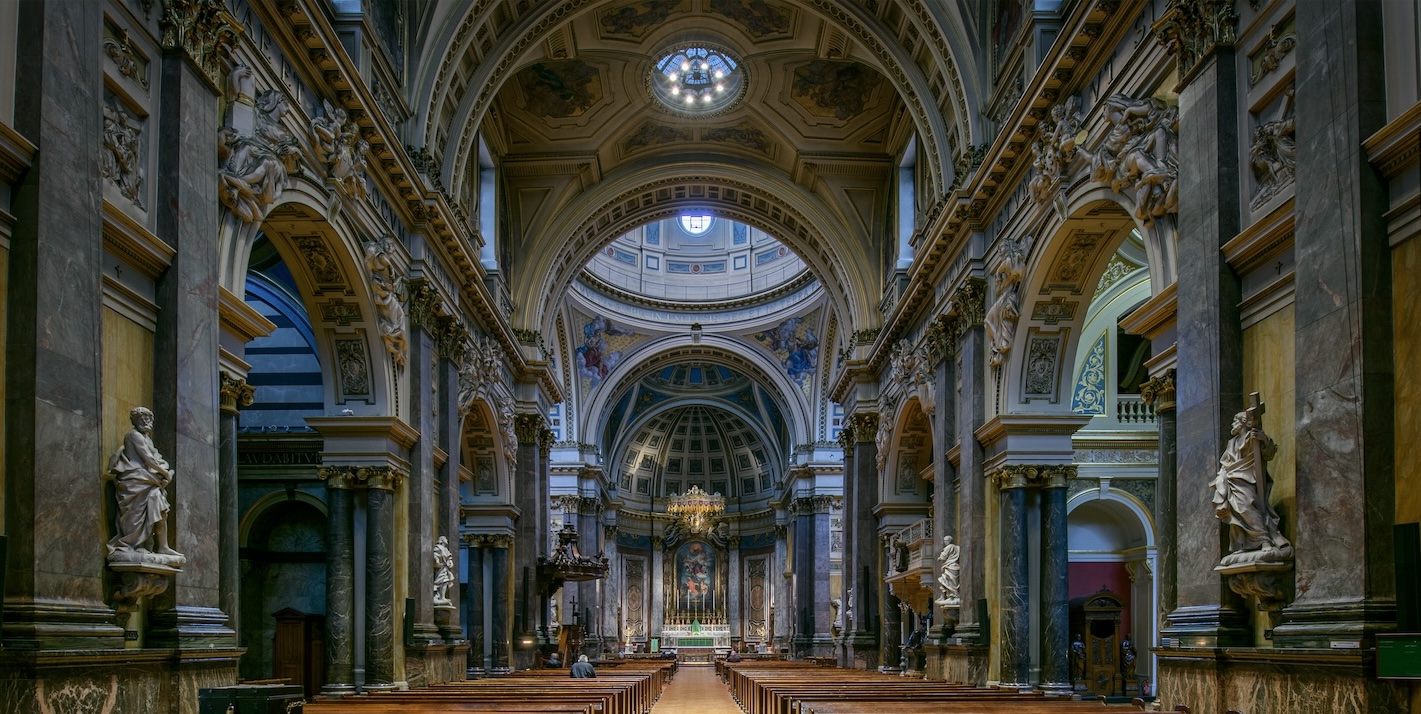

We began this season of Lent with the imposition of ashes. Although not a holy day of obligation, Ash Wednesday always promises a healthy congregation but this year many have commented on the extraordinary attendance at our Masses, two of which were “standing room only”. Many new faces, a good proportion of them belonging to young adults, presented themselves at the altar rails for “ashing”. Similar reports from other parishes around London, along with a marked increase in Sunday Mass attendance throughout the year, and of those requesting instruction in the Faith, suggest that the phenomenon of a Christian revival reported in the media over the last year or two would seem to be true, all of which is encouraging.
To the secular mentality the general theme of Ash Wednesday might not seem to be such a likely crowd-puller. The words which accompany the imposition of ashes – “Remember man that thou art dust and unto dust thou shalt return” – are a stark reminder of our human mortality. Death is something of an affront to “Modern Man”, one aspect of our existence that technological progress has failed to domesticate, although attempts are made to make it a matter of choice (through so-called euthanasia). There are those who assure us that “transhumanism” will inevitably confine death to the dustbin of history, along with smallpox which the World Health Organisation declared officially eradicated in 1980.
Thankfully, the Gospels assure us that we do not have to be Silicon Valley billionaires in order to live forever. In Baptism, the Christian has already died with Christ, and been buried with Him only to rise to everlasting life, so that the font is at once a tomb and a womb from which we are reborn. The separation of his body and soul, when the time comes, is the threshold over which his soul departs this earthly realm for eternity. He knows, because he repeats it every Sunday in the Nicene Creed, that when the King of Kings returns in glory to judge the living and the dead, his body and soul will be reunited. As long as we die in the state of grace, our risen bodies will be perfected, glorified and immortal in Heaven.
Meanwhile, in our Baptism we receive the vocation to keep on dying to ourselves in this life so that the supernatural life of the Resurrection might take ever greater possession of our hearts and souls.
In this sense we are called to perfection in this life. As Our Lord tells us, “Be you therefore perfect, as also your Heavenly Father is perfect. (Mt 5:48)” This might sound daunting, even off-putting, when we consider just how imperfect we are. But the things that are impossible for men are possible for God. It is His Sanctifying Grace infused into our hearts that gives us a supernatural likeness to Him, and it is our cooperation with the “actual graces” which He extends to us with boundless generosity that bring this likeness to ever greater perfection.
As Christians we die to ourselves so that we might enjoy this supernatural life ever more fully. It is for this reason that the Church in Lent urges us to focus with special attention on mortification, uniting ourselves with Our Lord’s forty days of fasting in the wilderness and, in Holy Week, with His Passion, so that having died to ourselves through self-denial we are well prepared to participate in the joy of His Resurrection at Easter. We accompany fasting with prayer so that He may communicate His divine life to us in abundance. We fortify our Lenten devotions with almsgiving, and/or other works of mercy towards those in need, so that His likeness will increase within us, always remembering that without charity nothing that we do can ever have any value in eternity.
Death was never part of God’s original plan when He formed Adam from the dust of the earth in His own image and likeness, breathing His own life into his nostrils. It only entered the human story after Eve allowed herself to be beguiled by the fallen angel whom we know to be Satan, appearing in the form of a serpent. On the Feast of the Annunciation, which we celebrate this month, we praise God for the reversal of that calamity and its dreadful consequences when God’s holy Archangel Gabriel appeared to the Virgin of Nazareth and announced that She would conceive and bear the long-awaited Messiah. In perfect obedience, She gave Her fiat and at that moment the Word became flesh within Her womb, conceived of the Holy Ghost. Through Her humble cooperation with God’s plan, She became the New Eve and the Mother of God, and now She reigns as Queen of the Angels and Saints in Heaven. We plead for Her intercession during the remaining weeks of Lent, asking that this season of grace may produce abundant fruit in our lives.
Father Julian Large
EXPLORE WHITFIELD
EXPLORE WHITFIELD